
Artisight has acquired TMG Global, a healthcare infrastructure and technology deployment firm, in a move the Chicago-based smart hospital company says will bring site readiness, installation, and field engineering services in-house. Financial terms of the deal, announced September 14, were not disclosed.
HotSpot Take
Artisight, an AI-powered smart hospital platform provider, has acquired TMG Global, a firm specializing in healthcare site surveys, network deployment, and large-scale technology rollouts. Financial terms were not disclosed. The deal brings TMG’s field engineering team in-house, giving Artisight a single unit to manage hospital implementations from initial site assessment through installation, testing, and clinical handoff. Trade publication HIT Consultant, in its coverage of the deal, noted Artisight’s expansion across health systems including UChicago Medicine, MetroHealth, and WellSpan Health. The acquisition targets a recurring bottleneck in smart hospital rollouts: coordinating multiple third-party subcontractors across physical infrastructure work.
TMG Global Brings Field Engineering In-House
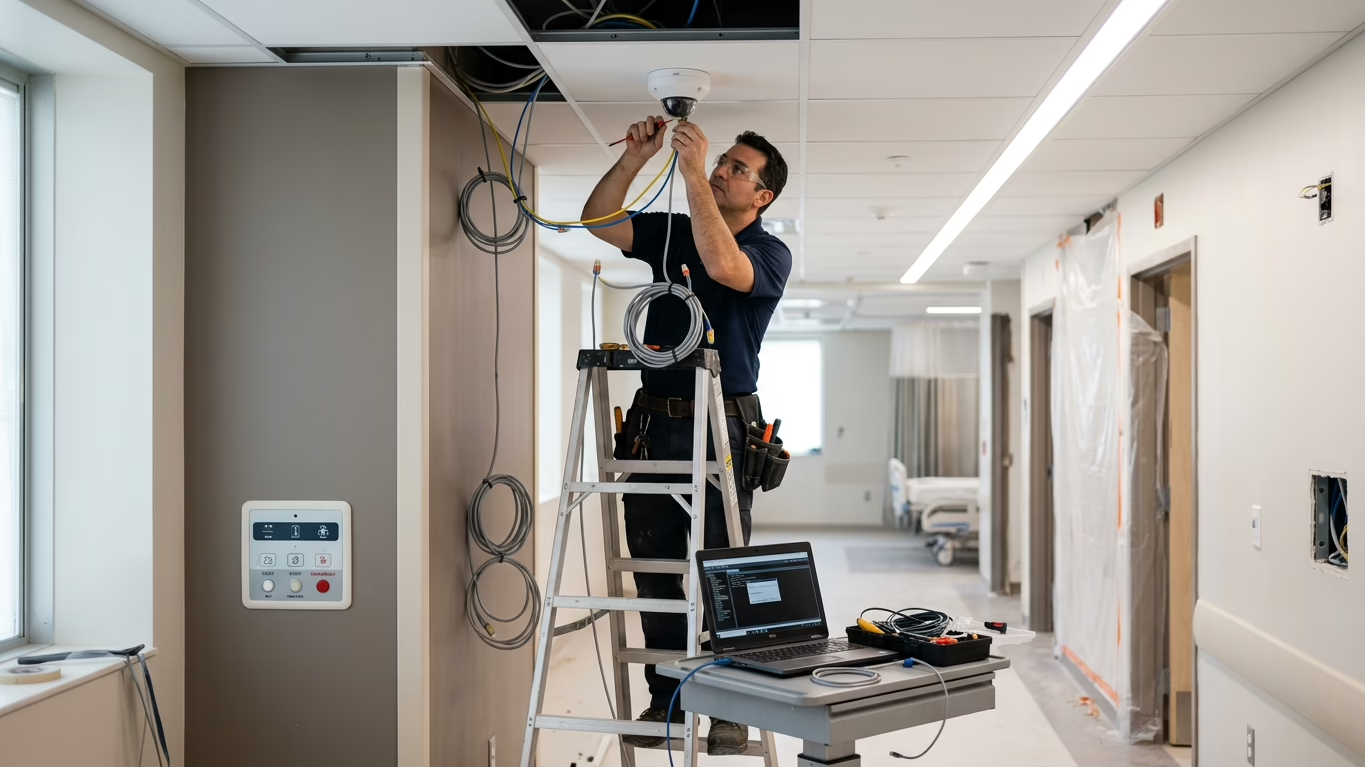
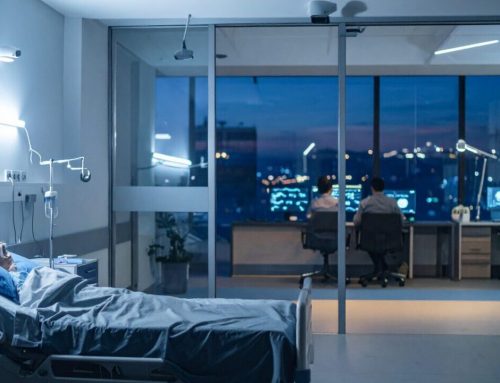
Smart hospital deployments depend on physical infrastructure work as much as software. — AI-generated image.
According to the companies’ joint announcement, the acquisition folds TMG Global’s deployment lifecycle expertise directly into Artisight’s operations. That includes program and project management, clinical-space and infrastructure surveys, remediation roadmaps, hardware logistics and staging, device and network installation, testing and validation, and Day 1 clinical support.
Artisight describes itself as a Smart Hospital technology company whose AI platform embeds computer vision, machine learning, and natural language processing into clinical environments, running on proprietary edge AI infrastructure built with clinicians. TMG Global, for its part, has built its reputation on large-scale healthcare technology rollouts, including rapid multi-state site surveys and enterprise network migrations. Under the deal structure, the acquired team will take on management of edge-compute hardware, including NVIDIA GPU-powered devices, across the clinical environments where Artisight’s platform runs.
The Deployment Bottleneck Artisight Is Targeting
“Smart hospitals represent the next era of healthcare—where intelligent infrastructure becomes a foundation for better, safer, and more efficient care,” said Dr. Andrew Gostine, co-founder and CEO of Artisight.
“Smart hospitals represent the next era of healthcare—where intelligent infrastructure becomes a foundation for better, safer, and more efficient care.” — Dr. Andrew Gostine, Co-founder and CEO, Artisight
The rationale behind the deal centers on execution, not new clinical capability. HIT Consultant, in its reporting on the acquisition, described the problem the deal is meant to solve as “the operational bottleneck of managing fragmented third-party subcontractors across physical IT infrastructure, leading to installation delays, cabling retrofits, and prolonged clinical handoffs.” For health systems signing multi-facility agreements spanning thousands of beds, that bottleneck can determine how quickly a contracted platform actually reaches the bedside.
Stryker’s SmartHospital Was Built the Same Way, at a Different Scale
Artisight is not the first smart hospital vendor to conclude that owning deployment and integration capacity matters as much as owning the underlying technology. Stryker assembled its SmartHospital platform, which now connects more than 85 products across the patient care journey, through a string of acquisitions rather than internal development alone. Stryker acquired Vocera Communications for $3.1 billion in 2022 for its communication and workflow software, then added Care.ai in 2024, an Orlando-based ambient monitoring and virtual-workflow company, in a deal whose financial terms were also not disclosed.
The comparison is not exact. Stryker’s acquisitions added clinical technology and intellectual property to an existing device portfolio. Artisight’s purchase of TMG Global adds execution capacity, physical deployment labor and project management, rather than new sensing or AI capability. Both moves reflect the same underlying judgment: that scaling a smart hospital platform across large health systems is as much a logistics and infrastructure problem as a software one.
Rival Platforms Are Pursuing a Different Kind of Integration
Elsewhere in virtual care, competitors are consolidating around a different point of leverage: certification inside the electronic health record. HealthTech HotSpot has previously reported that Artisight, AvaSure, Hellocare.ai, Caregility, and NESA have each pursued Epic Toolbox designation or comparable EHR integration pathways over the past year, a race to embed virtual care functions directly into existing clinical workflows rather than operate as standalone systems. AvaSure has described itself as the market leader in acute virtual care, citing more than 1,200 hospital partners.
There is no public indication that any of these vendors are responding directly to the TMG Global acquisition specifically. But the deal fits a broader pattern HealthTech HotSpot has tracked across the category: as health systems shift from point-solution monitoring toward full-platform orchestration, vendors are competing on two separate fronts at once, software integration depth on one side and deployment reliability on the other.
A Narrower Bet Than It Sounds
The acquisition is not a technology announcement. Artisight has not added new AI capability, and neither company disclosed deal terms or projected revenue impact, both signals that this is an operational consolidation rather than a transformative event for the broader smart hospital market, which one industry forecast projects will reach $363.9 billion by 2032.
Its significance is narrower and more practical: for hospital IT and clinical leaders already under contract with Artisight, or evaluating it, the deal is a bet that a single accountable team, rather than a chain of subcontractors, gets sensors, cameras, and edge devices installed and validated faster. If that holds up across the health systems named in coverage of the deal, including UChicago Medicine, MetroHealth, and WellSpan Health, the practical benefit shows up less in new features and more in how quickly nurses, patients, and care teams actually see a system go live.
— This original article was created with AI support.