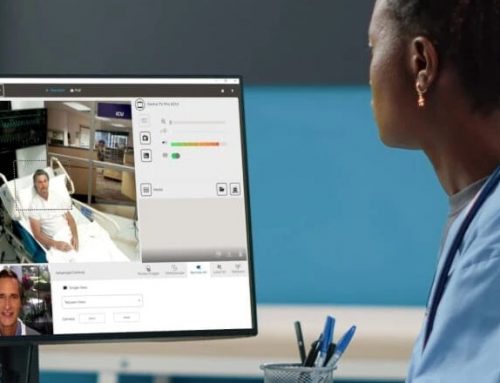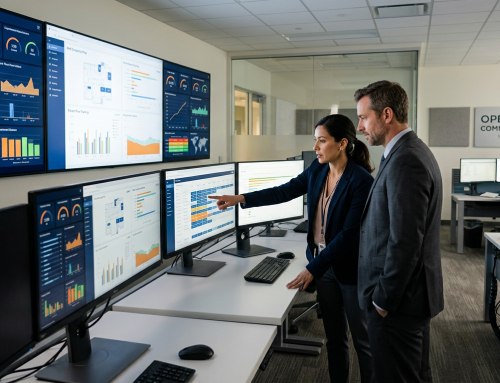

LeanTaaS, the hospital capacity management and patient flow software company, has acquired AI virtual care company LookDeep Health and used the deal to launch iQueue for Virtual Care. The new product brings computer vision monitoring of patient rooms into a platform built to manage beds, staffing, and throughput, pairing two technologies that hospitals have typically bought from separate vendors.
HotSpot Take
LeanTaaS announced on November 3, 2026, that it has acquired LookDeep Health, a developer of peer-reviewed computer vision for inpatient monitoring, and launched iQueue for Virtual Care as the first product under a new ambient intelligence strategy. The offering combines virtual observation, virtual nursing, and virtual medicine, and is designed to turn signals from enrolled patient rooms into prioritized work for care teams. Financial terms were not disclosed. The deal is LeanTaaS’s second acquisition in about two months and places an operations software vendor in direct competition with established inpatient virtual care platforms.
From Capacity Software to the Patient Room
LeanTaaS introduced iQueue for Virtual Care at its Transform Executive Summit, held in conjunction with Becker’s CEO + CFO Roundtable. The product brings together three offerings. Virtual Observation pairs continuous AI monitoring of enrolled rooms with tools that help observation teams engage patients and escalate to bedside staff. Virtual Nursing supports remote admissions, rounding, patient education, and discharge preparation. Virtual Medicine connects patients with remote physicians and specialists.
The underlying premise is that the EHR and other conventional systems miss, or record late, much of what happens in a patient room. In its announcement, LeanTaaS offers examples such as a patient trying to stand without assistance or one who has not been out of bed in many hours. iQueue for Virtual Care is designed to detect those moments and convert them into prioritized tasks for the appropriate team.
“We are dedicated to advancing the operational sophistication of our health system partners to match their clinical brilliance. Computer vision is the next phase of iQueue becoming the central nervous system of the hospital so the front line can sense, understand, act, and learn from every decision,” said Mohan Giridharadas, founder and CEO of LeanTaaS.
LeanTaaS says its software is used by nearly 200 health systems across more than 1,200 hospitals, centers, and clinics, primarily to manage operating rooms, infusion centers, and inpatient beds. The company plans to extend ambient intelligence into other iQueue products and workflows supporting capacity, patient flow, and care coordination.
“Ambient intelligence keeps watch when they can’t be there, so staff finally feel the technology works for them, not the other way around.” — Narinder Singh, Senior Vice President of Ambient Intelligence, LeanTaaS
What LookDeep Brings to iQueue
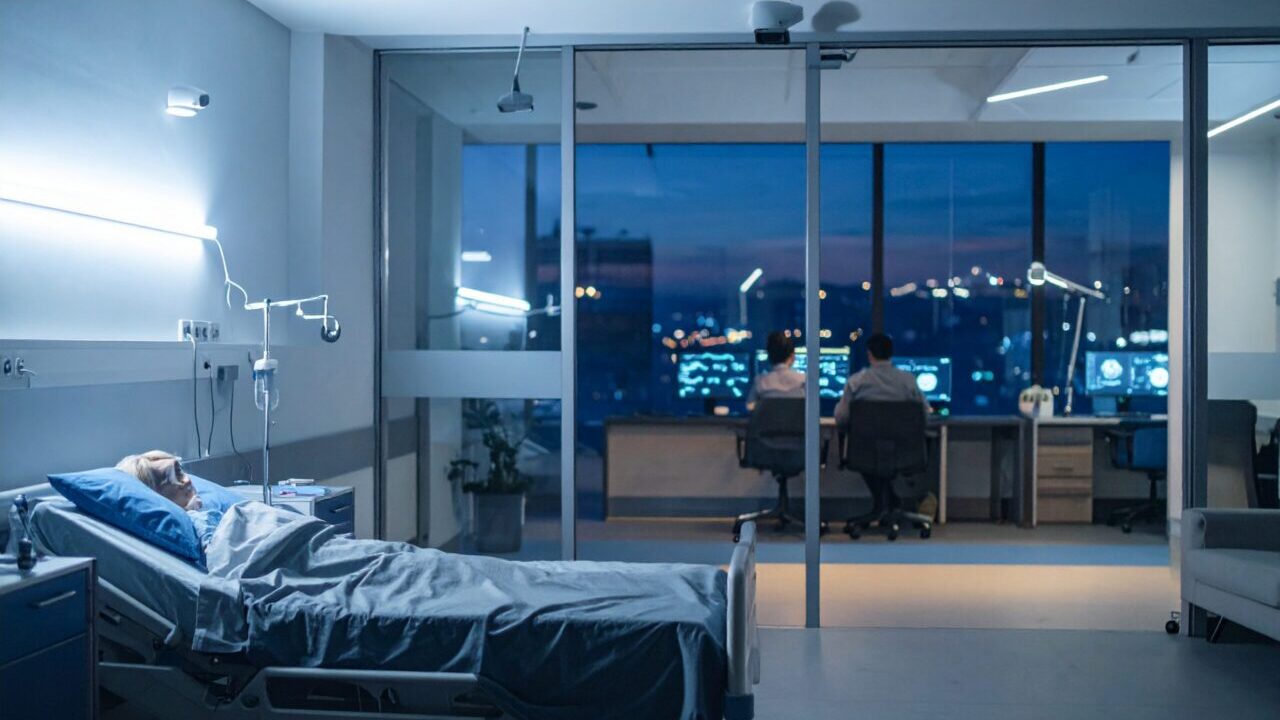
LeanTaaS is pairing in-room computer vision with its hospital operations platform. AI-generated image.
LookDeep, founded in 2019, built its business on video monitoring that uses computer vision to direct a virtual sitter’s or nurse’s attention to the patients who need it most. In 2025, the company published a peer-reviewed evaluation of its models in Frontiers in Imaging that reported both their performance and their limitations. It later introduced aimee, an AI agent that combines vision, sound, and language at the bedside.
LeanTaaS cited three assets from the deal: the vision AI, an open technology platform, and LookDeep’s experience deploying virtual care in health systems. Under the open approach, hospitals can use compatible cameras and in-room devices they already own or deploy supported hardware as needed. LeanTaaS executives told Fierce Healthcare that they chose an acquisition over a partnership so the technology could be integrated deeply into iQueue.
The release also cites results from LookDeep deployments: reductions of more than 70% in fall rates, twice as much nursing contact, an 80% reduction in medication errors, and three times the cost savings of traditional virtual sitting solutions. According to LeanTaaS, these results were measured across different deployments and operating models. The company did not name the sites or describe the methodology.
Singh, LookDeep’s co-founder and former CEO, now leads the strategy as senior vice president of ambient intelligence at LeanTaaS.
“The next leap in care is providing real support for the people inside the hospital,” Singh said. “Nurses and physicians cannot be in every room at every moment, and too often technology has added to their work instead of taking it away. Ambient intelligence keeps watch when they can’t be there, so staff finally feel the technology works for them, not the other way around. This is how we care for the people who care for the ones we love.”
Approaching Virtual Care From the Operations Side
The deal follows LeanTaaS’s acquisition of Aidin on September 1, which extended iQueue for Inpatient Flow into post-acute referrals and care transitions. With LookDeep, the company has now added capabilities at both the bedside and the discharge end of a hospital stay.
That path runs opposite to much of the inpatient virtual care field, where vendors that started with in-room video have been layering AI and analytics on top. AvaSure acquired Ouva’s smart room AI technology in 2024 and the virtual nursing platform Nurse Disrupted in 2025. Stryker has combined virtual monitoring with ambient sensing through its care.ai command center. Artisight recently bought deployment firm TMG Global to speed smart hospital installations, and Teladoc Health has added contactless vitals and an ambient AI scribe to its Solo platform. Caregility, Nesa, Andor Health, and VirtuSense compete for many of the same inpatient programs.
On the operations side, LeanTaaS competes with patient flow and capacity vendors including Qventus and TeleTracking, with Apella in operating room management, and with GE HealthCare, which in September introduced CareIntellect for Operations to forecast capacity constraints up to 72 hours ahead. LeanTaaS’s argument is that room-level signals give it an input that EHR-based tools may miss or receive late.
“Computer vision is the next phase of iQueue becoming the central nervous system of the hospital so the front line can sense, understand, act, and learn from every decision.” — Mohan Giridharadas, Founder and CEO, LeanTaaS
No competitor had publicly responded to the acquisition as of publication. Recent moves across the category point to where the competition is likely to play out: EHR integration, with AvaSure and Caregility both listed in Epic’s 2026 Toolbox for inpatient virtual care; size of installed base, where AvaSure reports more than 1,200 hospital customers; and the capacity to deploy hardware and staffing models across hundreds of rooms.
Integration Questions for Health Systems
Vertical integration carries tradeoffs. For hospitals already running iQueue, adding virtual care from the same vendor could reduce the number of systems that must exchange data and the number of contracts to manage. For hospitals that run LookDeep alongside other vendors’ tools, the question is how open the platform will remain under new ownership. Before the acquisition, LookDeep promoted integrations without vendor lock-in, including a February 2026 partnership with wearable monitoring company Sibel Health.
Execution is another consideration. LeanTaaS has grown as a software and transformation services company, while inpatient video programs depend on cameras, networks, installation, and staffing models. LookDeep’s deployment experience addresses part of that gap. Absorbing two acquisitions in roughly two months adds integration work of its own.
The evidence base will also draw scrutiny. LookDeep’s model performance has been through peer review, but the outcome figures cited in the release are not tied to named sites or published studies. Continuous video monitoring raises privacy and consent considerations as well, which health systems will need to address with patients, families, and staff as programs expand beyond the highest-risk rooms.
More Eyes Where Nurses Can’t Always Be
LeanTaaS is betting that operations software that can see what happens inside a patient room will help hospitals direct scarce staff to the right place sooner. Whether that holds will depend on independent results from deployments and on how well the combined platform fits existing clinical workflows. For patients and families, the measure is more immediate: whether someone notices, and responds, when a patient tries to get out of bed alone or has not moved for hours.
— This original article was created with AI support.