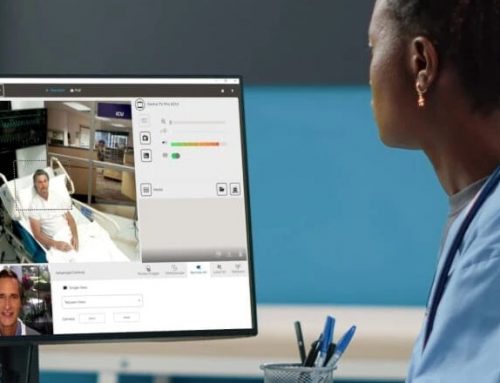

They need proof that helps them believe, remember, and explain why it matters.
“People don’t understand what we do” is a common frustration in technology marketing.
B2B healthcare founders, marketers, and sales leaders often struggle with mismatched leads, weak reactions to their pitch, stalled follow-ups, and buyers who by all appearances are interested but for some reason don’t move forward.
But a lack of understanding may not actually be the problem.
A prospect can understand what a product does and still be uncertain how it will serve her organization. Those uncertainties can delay or discourage action and slow buyer momentum. When that buyer stalls, it’s less to do with comprehension than confidence.

Irene Hatchett, Principal Healthcare Writer at HookedB2B Photo courtesy of Irene Hatchett
She has doubts that need resolving before she can take the next step:
- “Is the value real?”
- “Does this apply to my setting?”
- “Will implementation create chaos for my staff?”
- “Will the results justify what could be a painful change?”
A practice manager may read a claim like, “boost patient engagement,” and it can raise questions, like: “What change can I expect from engagement being boosted? Fewer no-shows? More completed screenings? Better adherence? More portal activity?” Also, “What kind of engagement increases and what does that do for my patients and my practice?” Another question: “Is the change significant enough to be worth the pain of implementation?”
She may scan your navigation or scroll down the page. The longer she goes without finding answers, the more difficult it is for her to dig for them.
It’s likely she’s busy and distracted. Paths of less resistance present themselves: “Get back to this later” is one. “See if another company can answer my questions” is another. Momentum drops off, and the prospect goes quiet.
You can reduce the odds of the stall by making evidence accessible at the point where the buyer needs it, and easy enough for her to find and carry forward so that tracking it down doesn’t become another buying task.
Who explains it when the salesperson’s not around?
Another challenge with vague claims is they don’t travel well. A sales rep may have a good conversation with a prospect and build some initial trust, but that prospect finds herself back with her team, having to explain the value and build support for it.
She may be persuaded, but she lacks the sort of evidence that can persuade her team. The rep isn’t present and when the sales materials are short on the necessary details, the offering’s worth is less likely to translate. With the rest of the team unconvinced, momentum toward purchase can slow or stop.
Proof is your stand-in when the sales rep’s not around
Unlike claims, proof does travel well. Evidence for a product’s performance that’s specific, believable, memorable, and transferable equips the buyer to translate your product’s value into terms that are credible to her team.
“Reduce manual work,” for example, is easier for a prospect to carry back to her practice if it’s illustrated by what changed for a real customer. A named testimonial stating “Our practice was able to stop paying overtime in three months” is specific and easy to remember and to repeat.
If that testimonial links to even a brief case study, it moves from merely indicating a credible result to illustrating for a team the circumstances behind it so they can see if it’s relevant or comparable for their practice. Details to include:
- size and type of practice
- what it was experiencing before implementation
- what implementation demanded and how challenges were handled
- what changed after launch
- how long it took to change
- what result or measurable outcome followed
Now your prospect can return to her team with a portable example that explains why your product may be worth serious consideration.
Before you explain more, check the proof.
If you have the feeling people don’t get what you do, it’s worth checking to see if your materials share specific, credible, transferable evidence for the claims you make.
Are you giving buyers the details they need to see how your solution has helped practices like theirs? What reassurance could you provide about the effort and change likely to come with implementation? Is the key information available in a format the prospect can persuasively convey to her team?
The goal is to supply buyers with enough evidence to not only believe the value themselves, but to make the case for it when you’re not in the room.
Guest Byline
Irene Hatchett – Principal Healthcare Writer at HookedB2B
Irene Hatchett is a B2B healthcare writer with 20 years of experience. Through her company, HookedB2B, she writes case studies, website copy, and sales materials for healthcare technology and product companies. Her focus is connecting product claims with specific details and credible evidence that help buyers evaluate value and explain it internally. Connect with her on LinkedIn.