
Collette Health has announced a partnership with Prime Healthcare aimed at building out comprehensive virtual nursing capabilities across the fifth-largest for-profit health system in the United States, following a nine-month competitive evaluation that validated virtual sitting as the foundation for enterprise-wide virtual care expansion. The agreement covers Prime Healthcare’s 55-hospital network across 14 states, with deployment scaling from a proven virtual observation base toward full virtual nursing programs.
HotSpot Take
Collette Health and Prime Healthcare have announced a partnership to build comprehensive virtual nursing capabilities across Prime’s 55-hospital network in 14 states. The agreement follows a nine-month, 13-hospital competitive evaluation in which Collette Health’s integrated model outperformed an unbundled multi-vendor configuration. A pilot at Paradise Valley Hospital recorded an 84% reduction in patient falls on med-surg units, establishing the virtual observation foundation from which Prime plans to scale toward enterprise-wide virtual nursing.
How the Partnership Came Together

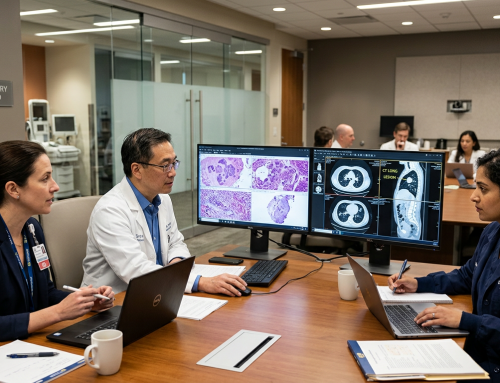
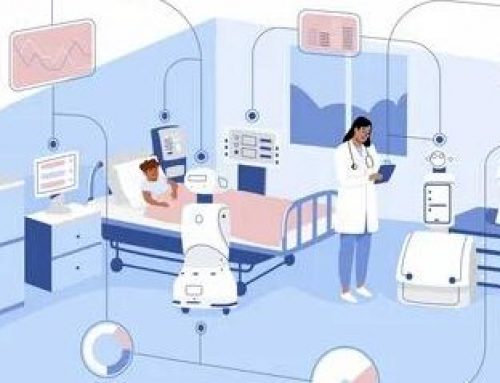
Virtual observation technology allows nurses to monitor multiple patients simultaneously, supporting safer care delivery and top-of-license practice.
Prime Healthcare did not select a virtual sitting vendor the conventional way. According to the company, Prime evaluated the programs across 13 hospitals in two regions over nine months, testing an integrated turnkey approach against an unbundled configuration in which hardware, software, and clinical staffing came from separate vendors. The head-to-head comparison gave Prime’s clinical and operational teams direct evidence before committing to an enterprise rollout.
Collette Health, ranked No. 1 in the Best in KLAS Virtual Sitting and Nursing category for both 2025 and 2026, was selected. The company’s integrated model, which combines virtual observation, virtual nursing, and workforce engagement through a single hardware, software, and user interface, aligned with the three dimensions Prime used to evaluate the programs: patient safety outcomes, caregiver adoption, and responsible resource stewardship.
The Paradise Valley Pilot Results
The clinical case for the partnership is anchored in results from Paradise Valley Hospital, one of Prime Healthcare’s California facilities, where Collette Health’s platform was deployed on medical-surgical units. According to the company, the pilot produced an 84% reduction in patient falls, a meaningful outcome in a care environment where falls carry significant clinical and financial consequences.
Inpatient falls represent one of the most persistent patient safety challenges in U.S. hospitals. The Agency for Healthcare Research and Quality estimates that between 700,000 and 1 million hospitalized patients fall each year, with more than one-third sustaining injury. The Centers for Medicare and Medicaid Services classifies falls with injury as “never events,” which limits reimbursement and transfers financial risk directly to the facility.
“This partnership exemplifies how virtual observation serves as the strategic foundation for comprehensive virtual care transformation.” — Holly Miller, CEO, Collette Health
“This partnership exemplifies how virtual observation serves as the strategic foundation for comprehensive virtual care transformation,” said Holly Miller, CEO of Collette Health. “Prime Healthcare’s commitment to expanding this proven technology across their network demonstrates the power of the value-based entry point approach: starting with virtual observation success and building toward full virtual nursing capabilities that enable additional use cases as they scale. When healthcare leaders see measurable safety improvements and cost savings, they gain the confidence to scale virtual care enterprise-wide.”
A Single Partner for End-to-End Accountability
A recurring theme in enterprise virtual care deployments is the operational friction that emerges when health systems assemble capabilities from multiple vendors. Prime Healthcare’s evaluation structure directly tested this dynamic, and the results appear to have reinforced a preference for accountability at a single point of contact.
Prime Healthcare, which operates more than 360 outpatient locations in addition to its 55 hospitals and serves more than five million patients annually, places particular emphasis on sustainability and appropriate scale. The system was founded in 2001 with a mission of strengthening community hospitals, and its virtual care strategy reflects that orientation.
“[Collette Health’s] integrated model provides clarity and consistency for nursing teams, with one accountable partner supporting the program end to end.” — Harsha Gopinath, Executive Director of Telemedicine Services, Prime Healthcare
“[Collette Health’s] integrated model provides clarity and consistency for nursing teams, with one accountable partner supporting the program end to end,” said Harsha Gopinath, executive director of telemedicine services at Prime Healthcare. “This simplifies issue resolution and allows caregivers to focus on patient care rather than vendor coordination.”
That framing aligns with a broader pattern in health system technology purchasing. As virtual care platforms have matured, the competitive conversation has shifted away from individual features toward integration depth, implementation quality, and measurable outcomes.
Virtual Nursing as the Next Phase
The partnership is structured in phases, with virtual observation serving as the foundation for an eventual expansion into comprehensive virtual nursing capabilities. Collette Health’s platform is designed to support that progression without requiring a system architecture overhaul, as Prime’s deployment scales enterprise-wide.
This approach is consistent with how Collette Health has positioned itself in the market. The company’s acquisition of the Virtual Nursing Academy in 2025 added structured clinical education and change management resources to its technology offering, giving health system partners a more complete implementation pathway from observation to full virtual nursing programs.
According to the company, Collette Health has partnered with more than 185 hospitals nationwide and delivered an estimated $3.96 billion in cost savings. Its cloud-first architecture is designed to integrate with existing EHR systems, smart boards, and televisions, reducing the infrastructure complexity that can slow enterprise adoption.
What This Signals for the Virtual Sitting Market
Prime Healthcare’s vendor evaluation methodology carries implications beyond this single partnership. Health systems that conduct rigorous, multi-site comparisons before committing to enterprise contracts are increasingly scrutinizing whether integrated platforms deliver meaningfully better outcomes than assembled multi-vendor configurations.
The market context is competitive. Collette Health holds the No. 1 KLAS ranking in its category for back-to-back years, but competes in a space that also includes AvaSure, Caregility, and other platforms that have made significant investments in AI-augmented observation and virtual nursing workflow integration.
For Prime Healthcare’s frontline nursing staff, the practical test of the partnership will play out as deployment expands across qualifying hospitals. The agreement’s focus on top-of-license nursing practice, where virtual observation technology handles continuous patient monitoring, and nurses direct their attention to clinical decision-making, reflects a staffing philosophy that has gained traction as workforce constraints continue to shape how large health systems configure care delivery.
— This original article was created with AI support.